ශ්රී ලංකා තානාපති කාර්යාලය, හැනෝයි, වියට්නාමය
இலங்கைத் தூதரகம், ஹனோய், வியட்நாம்
Embassy of Sri Lanka, Ha Noi, Viet Nam

Temple of the Sacred Tooth Relic (Dalada Maligawa)
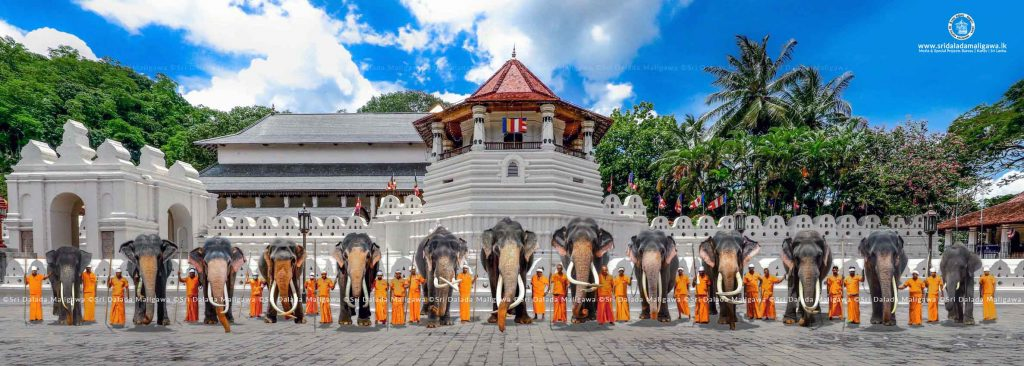
The Sacred Temple of the Tooth Relic – A Living Symbol of Buddhist Devotion
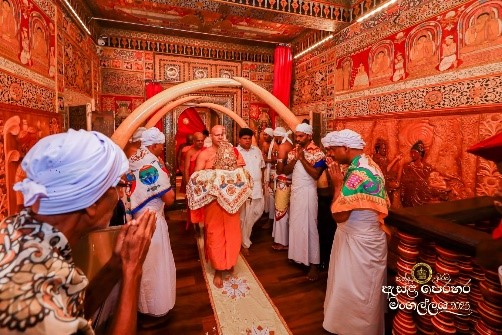
The Temple of the Sacred Tooth Relic in Kandy, Sri Lanka, is one of the most revered places of worship in the Buddhist world. It enshrines the left Tooth Relic of Sakyamuni Buddha, a symbol of immeasurable faith and devotion. Every day, thousands of local and foreign pilgrims visit this holy temple to pay homage, making it not only a living center of Buddhist practice but also a meeting place of cultures. In 1988, UNESCO recognized the temple as a World Heritage Site, honoring both its religious and cultural significance.
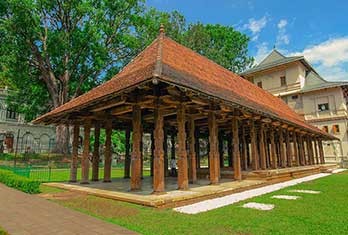
The temple is renowned for its unique Kandyan architectural style, reflecting the spiritual artistry of ancient Sri Lanka. Its design was influenced by earlier shrines (Dalada Mandira) that safeguarded the Sacred Relic in the island’s previous kingdoms. Surrounded by serene beauty, the temple stands beside the historic Royal Palace to the north, the peaceful Udawaththa forest reserve to the east, the tranquil Kandy Lake (Kiri Muhuda) to the south, and ancient shrines dedicated to deities on the west. Intricate carvings of gold, silver, bronze, and ivory further adorn the sacred complex, reminding visitors of both the devotion and craftsmanship of generations past.
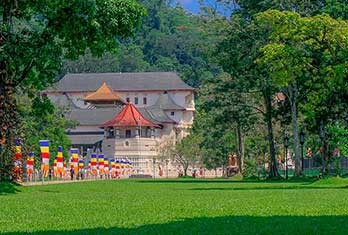
The journey of the Sacred Tooth Relic itself is a story of resilience and reverence. It was brought to Sri Lanka by Princess Hemamala and Prince Dantha from the ancient land of Kalinga, India, during the reign of King Kithsirimevan (301–328 CE). From then on, the Relic became more than a sacred object—it was a symbol of sovereignty, guarded within royal palaces in each successive capital, from Anuradhapura to Polonnaruwa, Yapahuwa, Kurunegala, Kotte, and Gampola. Today, in Kandy, the last royal capital, the Temple of the Sacred Tooth Relic continues to stand as the greatest Buddhist shrine in Sri Lanka, receiving the veneration of the faithful from around the world.
Over the centuries, successive kings preserved and rebuilt the temple whenever it was threatened by foreign invasions. King Wimaladharmasuriya I first built the shrine in Kandy (1592–1604), followed by later restorations under King Rajasinghe II and King Wimaladharmasuriya II. The structure seen today was established by King Narendrasinghe (1707–1739), further renovated and beautified by King Keerthi Sri Rajasinghe (1747–1781). The iconic octagonal pavilion, Paththirippuwa, was added by the last King of Kandy, Sri Wickrama Rajasinghe (1798–1815), enhancing the temple’s grace and symbolic meaning.
To this day, the Sacred Relic is cared for with the highest reverence under the custodianship of the two Maha Nayaka Theras of the Malwatta and Asgiriya monastic chapters, together with the lay custodian known as the Diyawadana Nilame. Daily rituals are performed three times a day by the monks, continuing an unbroken tradition of veneration for centuries.
The Temple of the Sacred Tooth Relic is more than a monument of history—it is a living sanctuary of faith. For Buddhists in Sri Lanka, Vietnam, and across the world, it represents the timeless presence of the Buddha, reminding all who visit of the path of wisdom, compassion, and devotion.
Kandy Esala Perahera: A Must-See Festival for Buddhists and Lovers of Cultural Heritage
In the heart of Sri Lanka lies Kandy, a city that preserves one of the most sacred relics in the Buddhist world: the left tooth of Sakyamuni Buddha, enshrined in the Temple of the Sacred Tooth Relic (Sri Dalada Maligawa). Every year, the city comes alive with the Kandy Esala Perahera, a spectacular ten-day festival that combines devotion, history, and cultural grandeur—truly a must-see for Buddhists and anyone who cherishes spiritual and cultural heritage
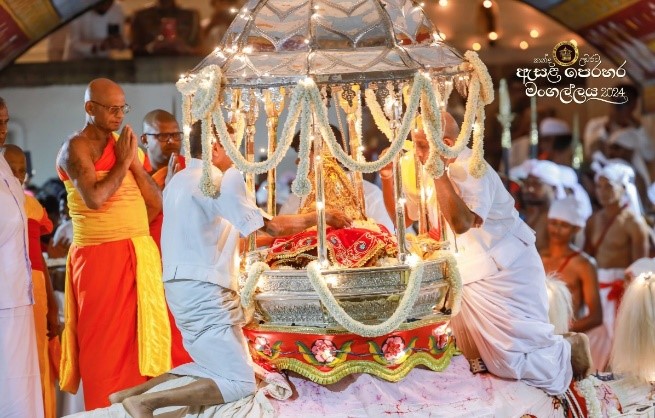
A Celebration of Faith and History
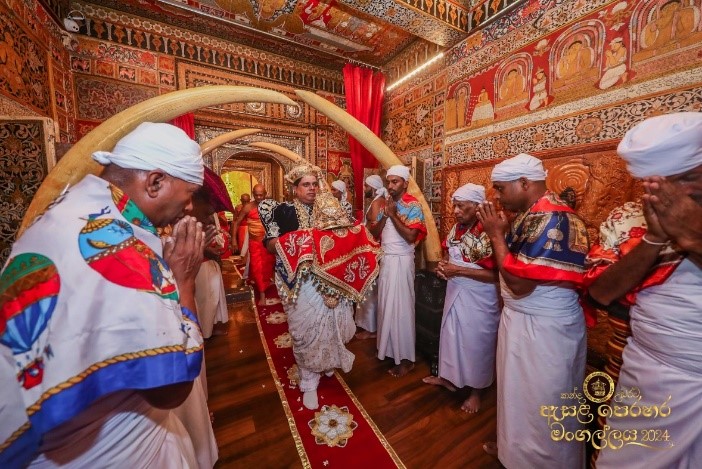
The Esala Perahera, held during the Esala full moon in July–August, has roots in ancient rain-invoking rituals that gradually evolved into a profound tribute to the Sacred Tooth Relic. The festival honors Buddha, the guardian deities of Sri Lanka, and the divine authority historically associated with kingship. It is a living tradition that has been carefully preserved for centuries, symbolizing the harmony of faith, governance, and cultural identity.
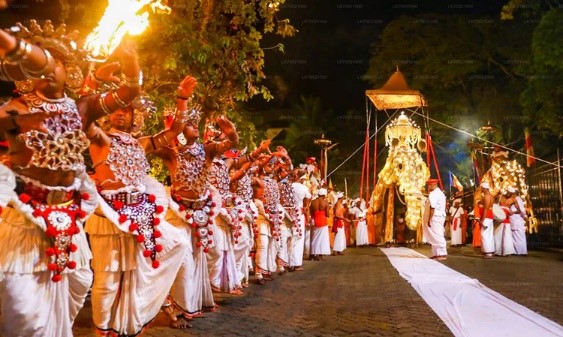
The festival is not only a religious event but also a cultural masterpiece. The streets of Kandy become a procession of color, rhythm, and devotion, featuring:
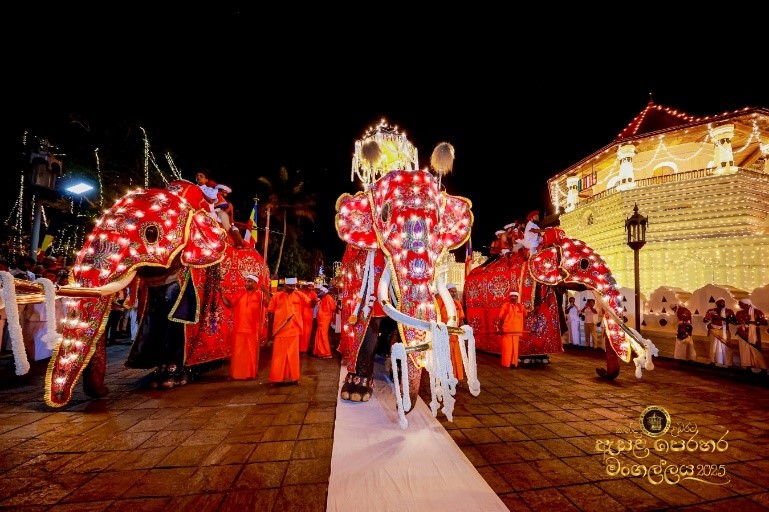
Kumbal Perahera: Nightly processions honoring guardian deities with drummers, dancers, and decorated elephants.
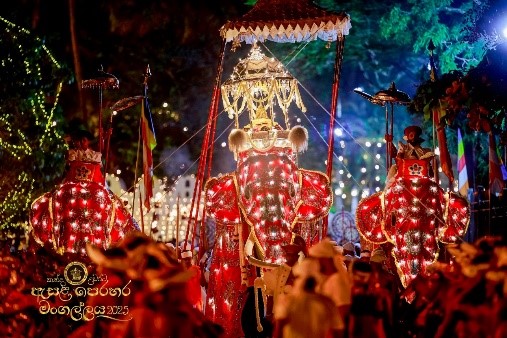
Dalada (Tooth Relic) Perahera: The highlight, with the Sacred Tooth Relic replica carried on the back of the majestic Maligawa Tusker, accompanied by priests, flag bearers, and ceremonial musicians.
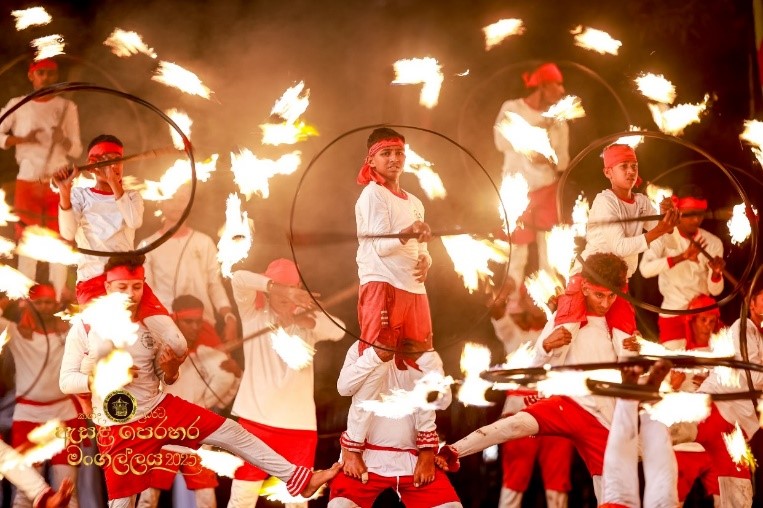
Grand Finale and Diya Kapeema: A dazzling finale with acrobats, dancers, and the sacred river ritual of water-cutting, invoking blessings and spiritual purification.
Cultural Splendor in Every Detail
The temple itself is a jewel of Kandyan architecture, adorned with gold, silver, bronze, and ivory carvings. The festival’s elephants, serve as living symbols of devotion, bearing the sacred relic with solemnity and grace. Every movement, every drumbeat, and every dance is steeped in centuries of ritual, artistry, and Buddhist symbolism.
For lovers of culture, the Esala Perahera is a window into Sri Lanka’s rich heritage—its temples, royal history, art, and traditional performances—preserved through the centuries and carefully maintained by the custodians of the Tooth Relic.
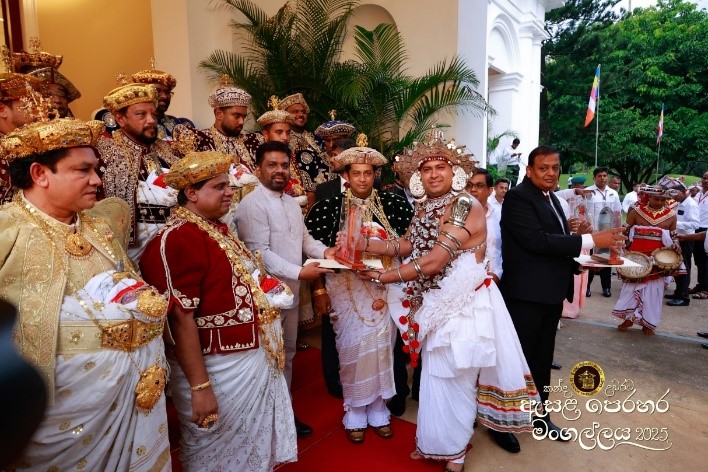
Why Vietnamese Buddhists Should Witness It?
For Vietnamese Buddhists, who cherish sacred relics in pagodas from Yên Tử to One-Pillar Temple, the Kandy Esala Perahera is an unparalleled experience:
A spiritual journey: Witness the living devotion to Buddha, the sacred relic, and guardian deities.
A cultural treasure: Experience centuries-old traditions, music, dance, and ceremonial art.
A reminder of shared Buddhist heritage: Connect with the global Sangha through devotion, reverence, and celebration.
The Kandy Esala Perahera is more than a festival—it is a vibrant tapestry of faith, history, and artistry. For any Buddhist or cultural enthusiast, it is an unmissable experience, a living testament to the enduring spirit of devotion and heritage.
https://kandyesalaperahera.com/about/